Book Review: Making Sense Out of Suffering
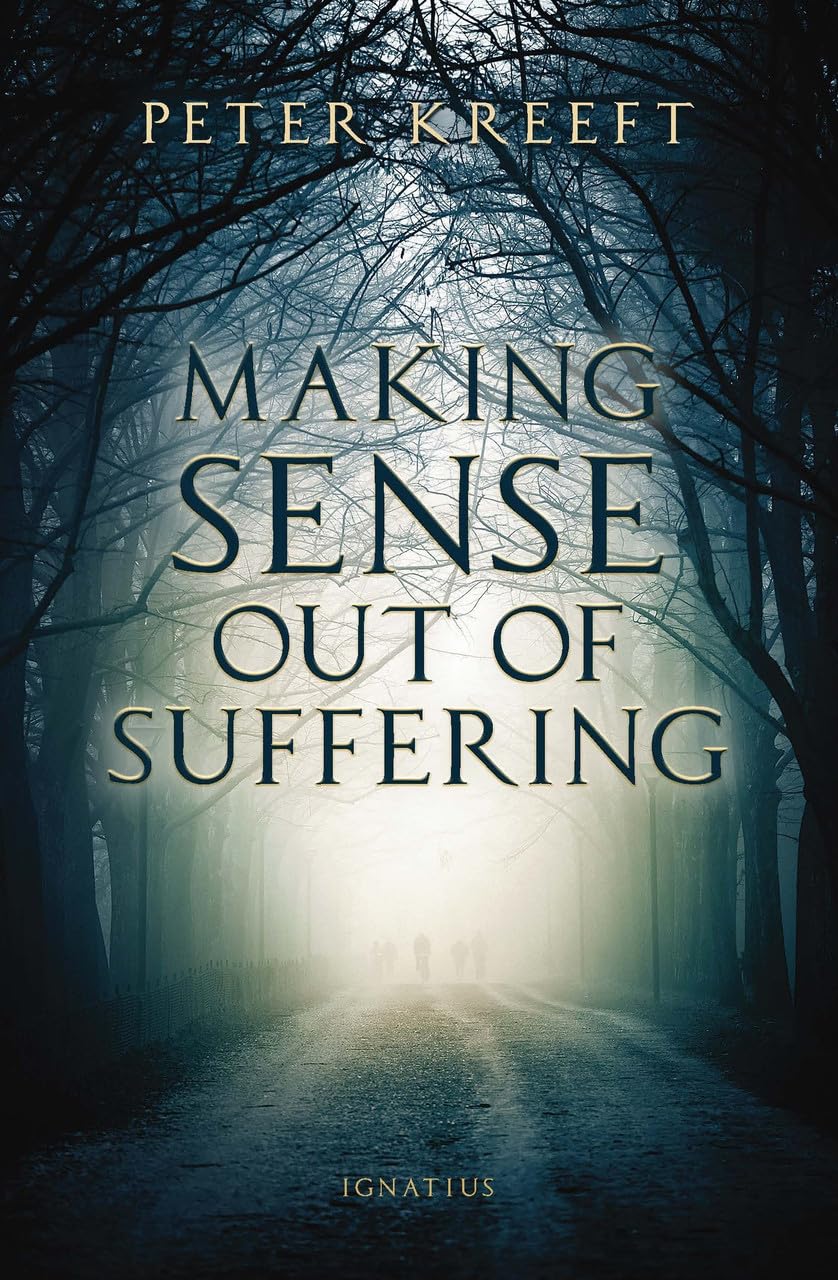
Making Sense Out of Suffering is a book by Peter Kreeft, a Catholic philosopher at Boston College. He writes very well, and this book is no exception. Part of what makes his writing style so effective is that it is very accessible. He is clearly a philosopher and knows the subject deeply, but there is a distinction between knowing philosophy and being able to communicate it. That is what Peter Kreeft does so well: he makes philosophy accessible to a general audience.
That does not mean there are not moments where he goes deeper into philosophy, but throughout the book he is actively trying to communicate these ideas clearly and understandably. This book really makes very few assumptions about the audience. It is written for everyone, Christians and non-Christians alike.
Kreeft begins by carefully defining the problem of suffering and examining answers that are not necessarily Christian, along with why they ultimately fail. From there, he gradually builds a foundation. I thought the organization of the book was especially good. There are sections where he discusses the problem itself, followed by sections such as Seven Clues from Philosophers, Seven Clues from Artists, and Eight Clues from the Prophets. Later, the book moves more directly toward the Christian answer centered on Jesus, the Tears of God. Near the end, he also discusses why modernity struggles to understand suffering at all.
This book is packed with information: so many nuggets, so many perspectives drawn from philosophers, artists, prophets, and thinkers throughout history. I believe there is something in this book for everybody.
Memorable Insights
There were several ideas that especially stood out to me. One of the first was Kreeft’s framing of the problem of evil as the apparent inconsistency among four propositions: God exists; God is all-powerful; God is all-good; and evil exists. Different philosophies attempt to resolve the tension by denying or weakening one of these propositions, but Kreeft carefully examines why those solutions ultimately fall short.
A second idea that fascinated me was the distinction between a problem and a mystery. Drawing from the philosopher Gabriel Marcel, Kreeft explains, “A mystery is a problem that encroaches on its own data.” In other words, it is something we cannot fully detach ourselves from or analyze objectively because we are personally involved in it. For example, falling in love is a mystery, whereas getting to Mars is a problem. Evil is a mystery, not merely a problem, because we ourselves are involved in it. When we stand outside of a problem, we can gather data, analyze it, and work toward a solution. But in a mystery, we ourselves are participants. That changes how we perceive and experience it.
Another memorable passage reflected on what a poet is: “A poet is an unhappy being whose heart is torn by secret sufferings, but whose lips are so strangely formed that when the sighs and cries escape them, they sound like beautiful music.” It goes on to say that when we ask the poet to sing again, we are in effect saying: “May new sufferings torment your soul.” My wife, who is an artist, laughed and said, “that’s exactly how it feels.” It is an astonishing way of looking at artists and poets. Suffering is part of our story and part of our humanity, and yet something beautiful can emerge from it. That naturally connects to the Cross. Jesus shows the ultimate meaning of suffering by entering into suffering Himself and bringing good out of it.
A final memorable insight came from the section discussing the prophet Samuel. It describes a cycle that civilizations (and individuals) often go through: suffering, repentance, blessedness, luxury, pride, disaster, and then back again to suffering. This observation felt incredibly relevant. It highlights the importance of humility both for individuals and for societies. Suffering has a way of stripping away illusions, leading us toward repentance, and repentance toward blessedness.
Overall, I thought this was an excellent book. It is thoughtful, deeply philosophical, spiritually rich, and full of memorable insights. I enjoyed it a great deal and would highly recommend it.
Comments
Comments are welcome. Please keep discussion thoughtful, charitable, and relevant.