Book Review: Who Am I to Judge?: Responding to Relativism with Logic and Love
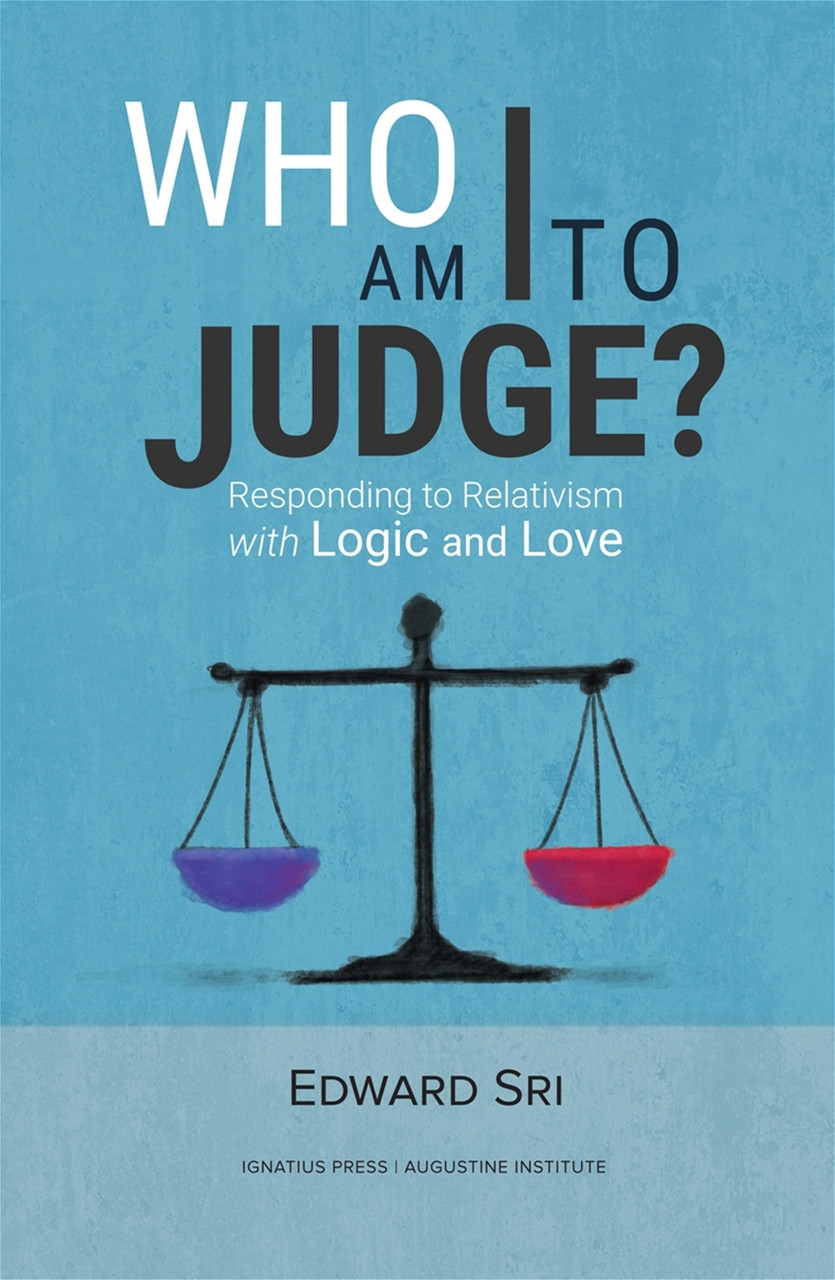
“Don’t be so judgmental!” is a phrase one might hear when talking to someone about morality, right and wrong, or good and evil. Dr. Edward Sri writes Who Am I to Judge? to address the problem of moral relativism and how we can respond to it with logic and love.
In a relativistic society, each person can have his or her own truth. Relativism denies that there is an objective truth, but there are many problems with this view. For example, relativism can become very self-centered, leading to a modern notion of freedom as doing whatever a person wants, even if it hurts relationships. In contrast, true freedom is the freedom to love. Through ethics and the moral law, man can fulfill his telos, his end goal, which is friendship with God and neighbor.
This book is well written, well organized, and packed with practical situations for encountering relativism. Sri also draws from philosophy to teach about morality in a clear and approachable way. The book moves us toward virtue and helps us think about how we can grow in our relationships and respond to relativistic challenges from others. Sri equips the reader with seven keys to responding to relativism. A few of them are to lead with mercy, to understand that relativism wounds people, to recognize that relativism is not neutral, and to take on the heart of Christ. In every chapter, Sri includes questions for reflection and discussion, which makes this work well as a study book on this topic.
If I were to pick out the biggest ideas that stuck with me from this book, they would be these: relativism wounds people, making judgments is not the same as judging souls, and truth must be spoken with mercy.
- Relativism wounds people because it rejects objective truth. It can act as a mask for wounds, while also rejecting the moral law that helps us grow in right relationship with God and neighbor. If we are not living according to the truth, then we are not becoming who God made us to be.
- Making judgments is not the same as judging souls. We can judge whether it is raining and need an umbrella, whether a toddler running into the street is a good thing or not, or whether a person’s moral actions are good for them. These judgments are not the same as judging a person’s soul, which is between that person and God.
- Truth must be spoken with mercy. Sri discusses how St. Catherine of Siena was once shown that she had the sin of judging people by noticing other people’s faults. She came to see this as the devil’s trap, because instead of wanting to help people, she was being tempted to judge and condemn them. In contrast, Christ has a heart of mercy. When we lead with mercy, we are able to love the person in front of us.
This was a very good book, an excellent read, and very edifying. I found it especially helpful because it is not merely about winning arguments; it is about learning how to speak the truth without losing the heart of Christ. I definitely recommend it to those who want to better understand moral relativism and respond to it with logic and love, whether those conversations happen in the wider culture, among friends, within families, or even while forming children.

Comments
Comments are welcome. Please keep discussion thoughtful, charitable, and relevant.